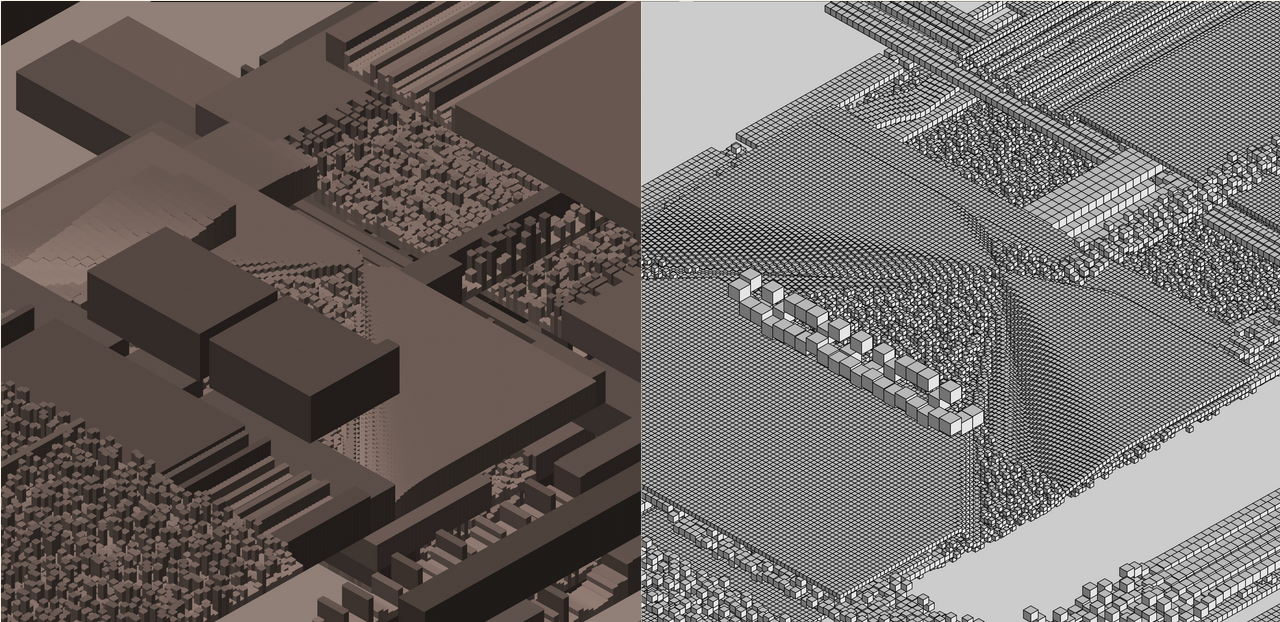
ruination is a generative code that draws a scene of isometric cubes. Taking inspiration from ruins, the scenes are meant to look like a decimated landscape that does not feel like it has a start or an end. A myriad of cubes is laid across a vast landscape in peculiar logic that seems to shift with every piece. Being generative, the code can run multiple times and produce different compositions.
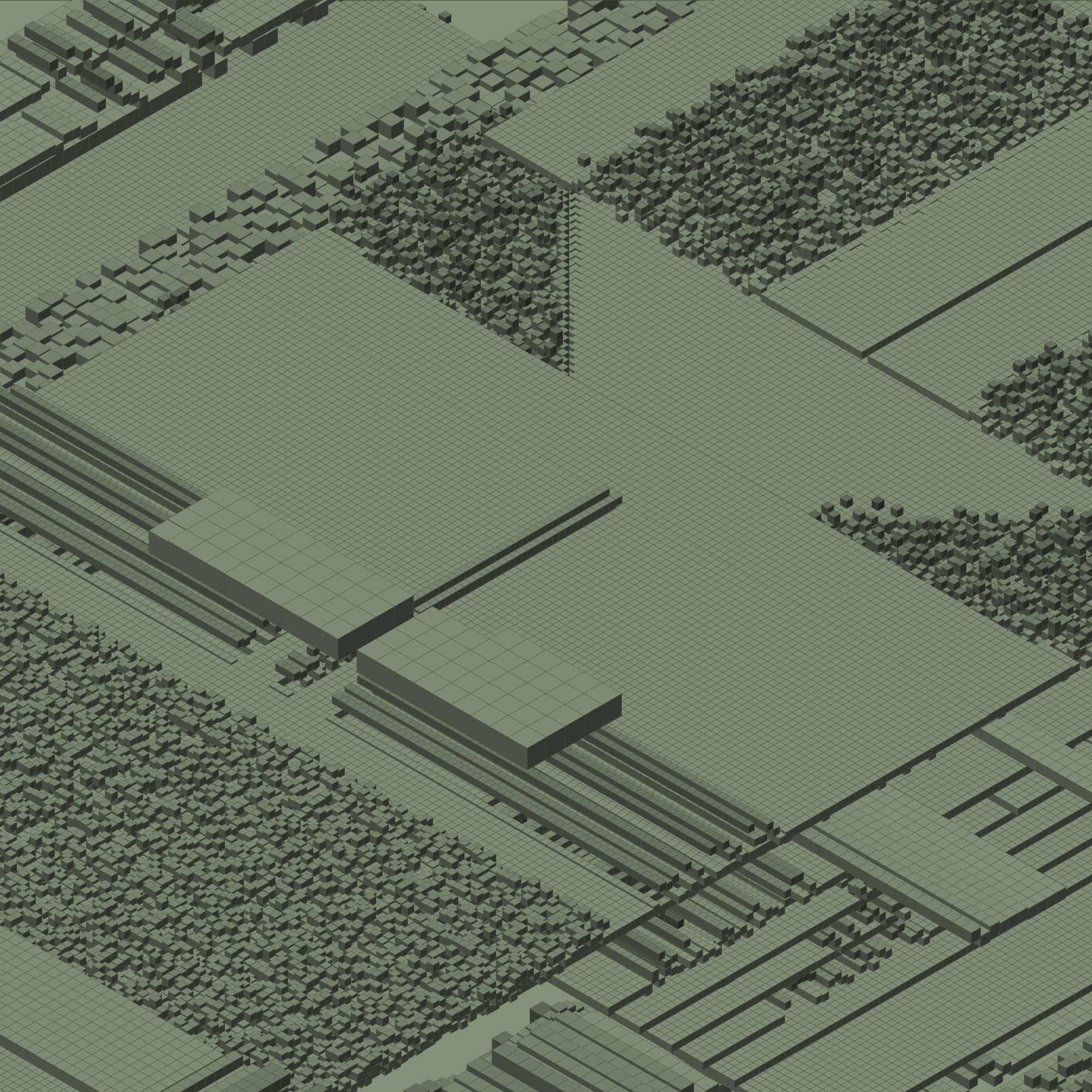
When making the piece, the question that I asked myself was that. given that the code creates landscapes and structures in a decimated state, is ruination the natural state of things in this world? Therein, if the creation of destruction is normal and intended, is the result destroyed at all?
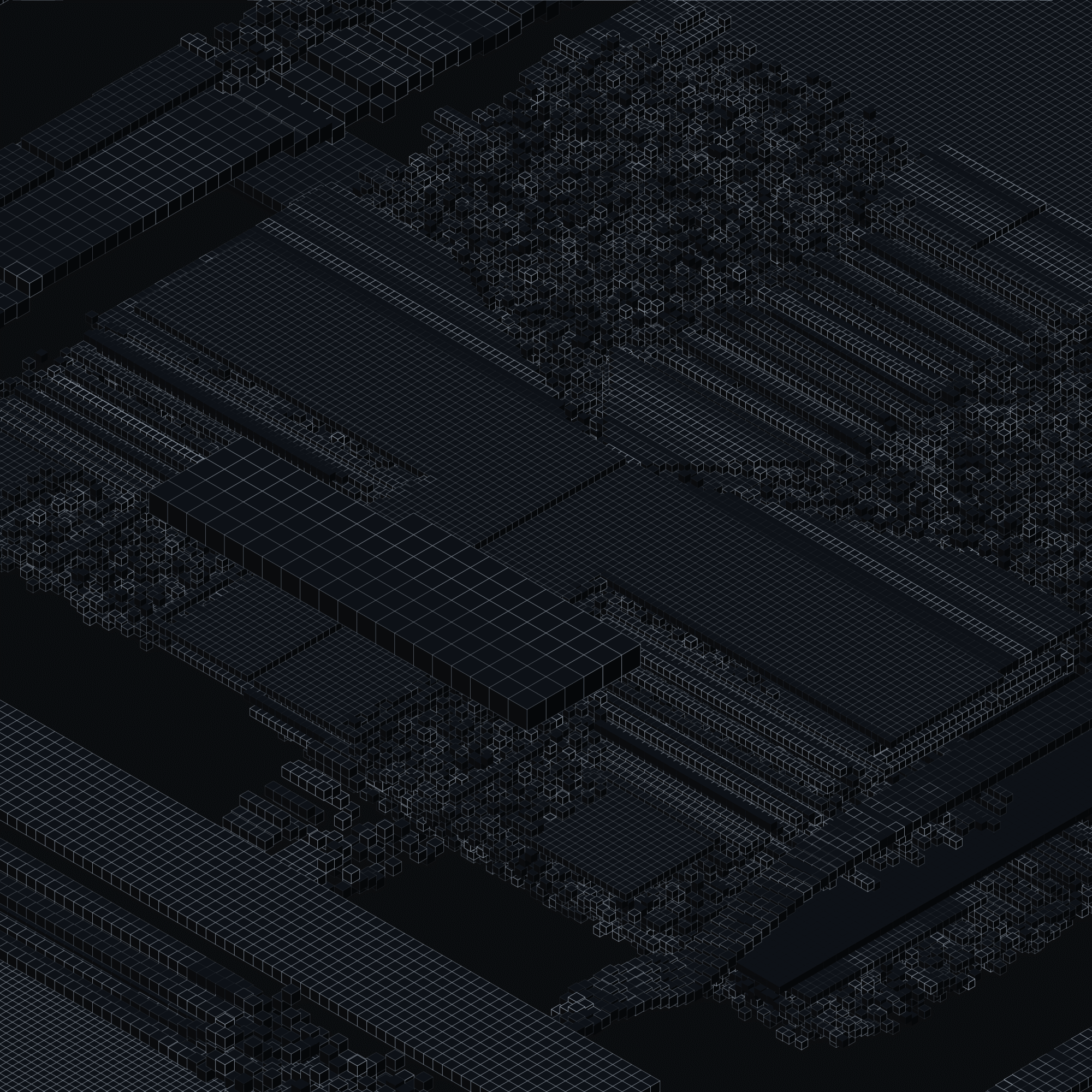
ruination was, surprisingly, the result of a mistake. I was exploring recursive subdivision, a coding technique that allows you to create an instance of an object such as, for example, a square. Then, based on the rules that you determine, the code can then use those properties to create another square so that the new one is based on the previous one. With a square, this could mean that the side length of the new square could be half the size of the original. This process can then be done multiple times creating a sort of “nesting” look. When I was working, I was actually trying to figure out how to get an elegant and precise subdivision. However, for reasons I am still yet to understand, my system was faulty. This fault resulted in ruination’s distinctive look of ordered chaos. However, I preferred the chaos of this “faulty” system more and decided to just go with it.